Welcome to WordPress. This is your first post. Edit or delete it, then start writing!
Category: Uncategorized
-
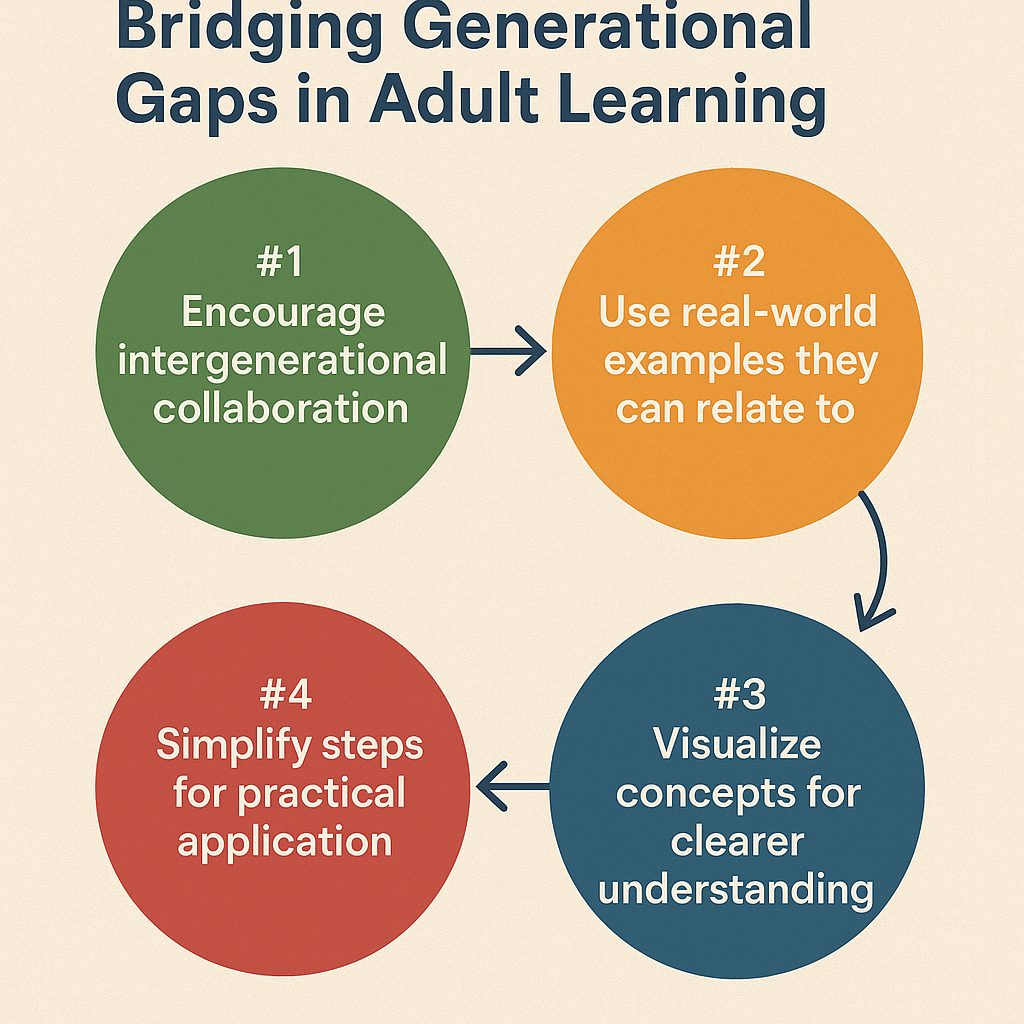
Bridging Generational Gaps in Adult Learning: A Practical Framework for Real-World Application
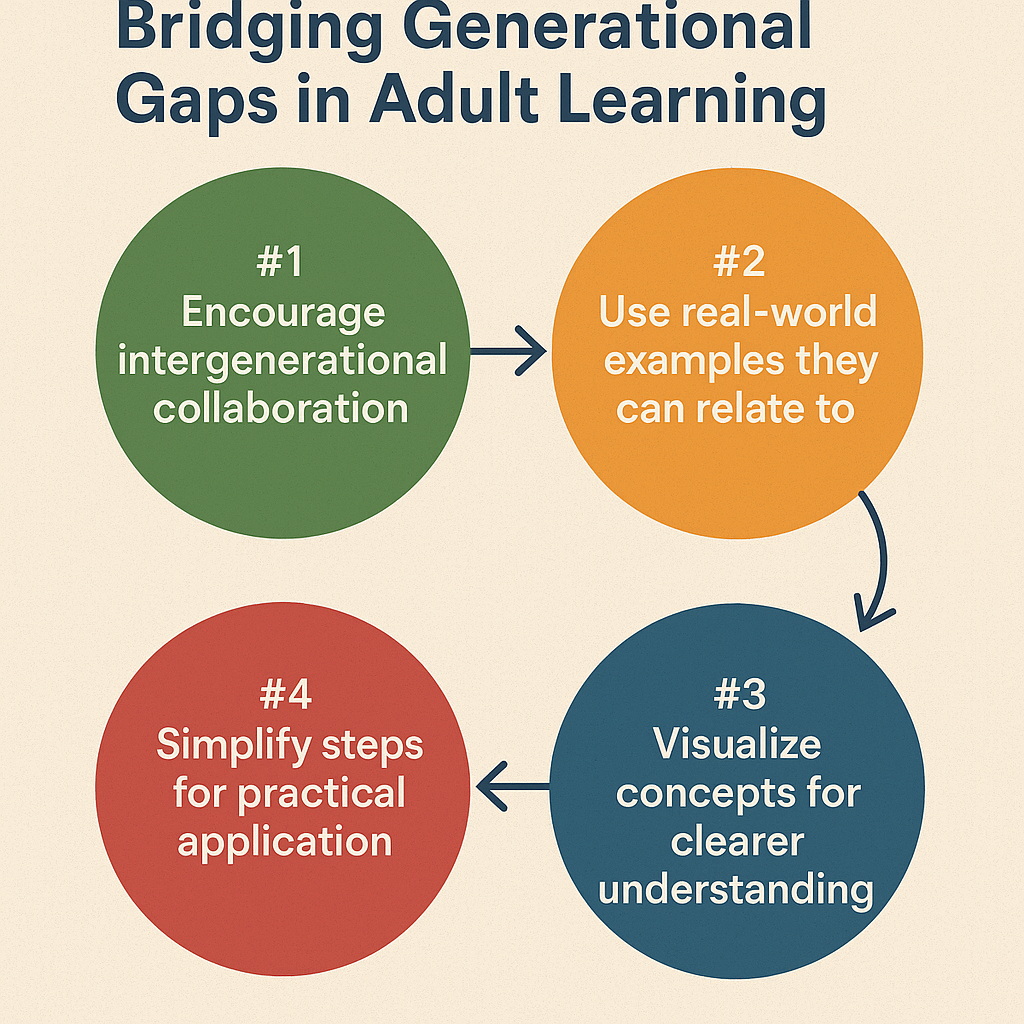
As an instructional designer, one challenge we often hear from adult learners—especially in professional settings—is the struggle to connect with content across generational lines. Whether they’re boomers learning digital tools or millennials navigating outdated policies, the generational divide in learning is real—and so is the frustration of applying theory to practice.
This design GEN Connect + APPLY framework: a method built to foster generational understanding and support practical application in adult learning environments. Whether you’re teaching in a college classroom, leading professional development, or designing workplace training, this approach meets adults where they are—and helps them move forward, together.
🔹 Step 1: Start with Story-to-Skill Warm-Ups
We remember stories more than slides. Begin each lesson or module with a brief narrative, real-life case study, or video clip that highlights a moment of intergenerational tension or collaboration.
Prompt learners:
-
What values or assumptions are present here?
-
How would someone from your generation respond differently?
This technique does two things: it sets the tone for empathy and connects abstract content to lived experience right from the start.
🔹 Step 2: Teach with a “Bridge Lens”
Most adult learners want content that respects their experiences. Use a “Bridge Lens” to teach the same concept through multiple generational perspectives.
🔍 Example: Teaching digital communication?
-
Show how Gen Z uses Slack or emojis for nuance.
-
Contrast with Gen X or Boomers’ reliance on formal emails or memos.
This validates different work styles and opens up honest dialogue about change.
🔹 Step 3: Peer Mapping Sessions
After introducing new content, invite learners to map out how they would each apply it, based on their experience and generational habits.
Set up cross-generational pairs and give a real-world challenge. Have them sketch a solution from their POV—then compare. This turns differences into assets, encouraging collaboration over conflict.
🔹 Step 4: “Do-It-Now” Practice + 2-Minute Reflection
Learning means nothing if it isn’t used. Every session should end with an immediate, real-world task—something learners can try out that same day.
Follow it with a reflection:
-
How did it feel to apply this new skill?
-
What would I do differently next time?
These questions prompt self-awareness and adaptation, two key traits in adult learning.
🔹 Step 5: Visual Learning Journals
Ditch the text-heavy notes. Replace them with guided visual journaling prompts.
Ask learners to:
-
Sketch a quick mind map of what they learned.
-
Draw a “before and after” timeline of their understanding.
-
Create a symbol or metaphor for the new skill (e.g., “I’m no longer in the fog—I have a compass.”)
This makes learning memorable and personal, especially for learners who are more visual or hands-on.
Why This Works for Adult Learners
✅ It honors lived experience ✅ It turns generational differences into strengths ✅ It promotes immediate, tangible application ✅ It creates space for self-reflection ✅ It builds empathy and team cohesion across ages
Final Thoughts
We often hear that one size doesn’t fit all in education—but that’s especially true for adult learners. Whether they’re 28 or 58, learning must feel relevant, respectful, and realistic.
The GEN Connect + APPLY method offers a blueprint to bridge generational gaps, support diverse learners, and turn theory into action—one lesson at a time.
🗣 How do you make your adult learning experiences more inclusive and applicable? Share your thoughts or tips in the comments!
#InstructionalDesign#GenerationalDiversity#InclusiveLearning#ProfessionalDevelopment #EdTech #LifelongLearning#LearningAndDevelopment #EquityInEducation #GenConnect#BridgingGenerations #LearnerCenteredDesign #AdultLearning
-
-
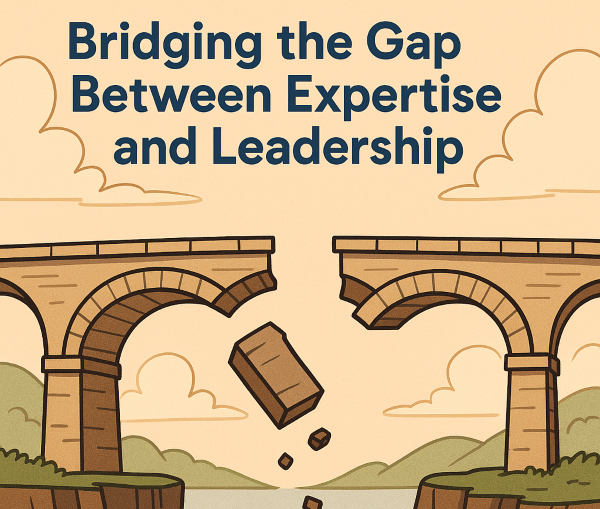
Title: When Expertise Isn’t Enough: The Leadership Gap in Higher Education
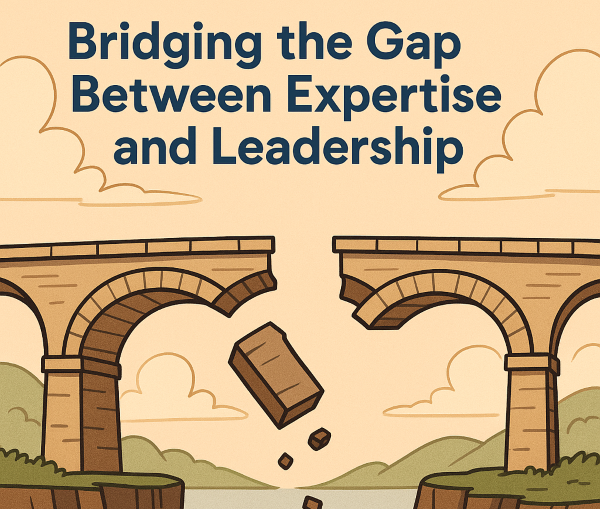
Bridging the Gap Between Expertise and Leadership 🎓 When Leadership Lacks Vision: A Personal Reflection on Higher Ed Hierarchies
In many large institutions—universities, colleges, and research institutes—titles like Dean, Department Chair, Assistant Director, and Chancellor carry weight. These positions are often occupied by individuals with impressive academic credentials: seasoned engineers, tenured scientists, or distinguished scholars. But what’s often missing from their resume is just as important as what’s listed—leadership training, management skills, and emotional intelligence.
I say this not as a critique of intellect, but as a reflection on a troubling pattern I’ve witnessed time and again. These leaders are brilliant in their fields, no doubt. But when it comes to managing people, navigating human dynamics, or fostering a positive culture, their lack of background in leadership, behavioral sciences, or organizational management becomes glaringly evident.
Too often, we conflate subject matter expertise with leadership capacity. But they are not the same. Leadership isn’t about knowing the most—it’s about knowing how to bring out the best in others.
The Result of a Narrow Pipeline
Many of these individuals rise through the ranks due to tenure, seniority, or institutional politics. Few, if any, have received formal training in managing diverse teams, resolving conflict, or cultivating inclusive environments. And yet, they are tasked with leading departments, shaping policies, and mentoring faculty.
This can lead to a style of leadership that is:
· Authoritarian rather than collaborative
· Reactive rather than visionary
· Transactional rather than transformational
These are leaders who often say, “You’re supposed to do this,” instead of asking, “How can I support you in doing this well?” They manage by checklist rather than by inspiration. And this approach does more harm than good.
The Real Cost of Poor Leadership
The consequences are not abstract. Faculty morale suffers. Innovation slows. Bias festers unchecked. And most importantly, students—the ultimate stakeholders—feel the impact in the form of disengagement, inequity, and a lack of belonging.
Leadership in education isn’t just about running meetings or approving budgets. It’s about creating an environment where people can do their best work and students can thrive.
What Needs to Change in My Opinion
We need to stop assuming that academic excellence automatically qualifies someone to lead. It doesn’t.
Here’s what institutions should consider:
· Leadership Training for Academic Leaders: Before or upon stepping into leadership roles, deans and chairs should complete training in management, DEI, and behavioral dynamics.
· Evaluations Beyond Research Output: Performance reviews should include feedback on leadership effectiveness, emotional intelligence, and ability to foster collaboration.
· Diversifying the Leadership Pipeline: Elevate educators and administrators who have demonstrated not just scholarship, but people-centered leadership.
Final Thoughts
It’s time to ask hard questions: What does it really take to lead in education? And are we choosing leaders based on their capacity to guide people—or just their academic accolades?
Education deserves leaders who understand that managing isn’t leading—and leading starts with listening.
Let’s lead better. For our teams. For our institutions. And above all, for our students.
✨ What have you witnessed in academic leadership? Share your experiences below or reach out—I’d love to hear your thoughts.
#HigherEdLeadership #EquityInLeadership #InstructionalLeadership #EducatorVoices #LeadByExample #EducationMatters
-
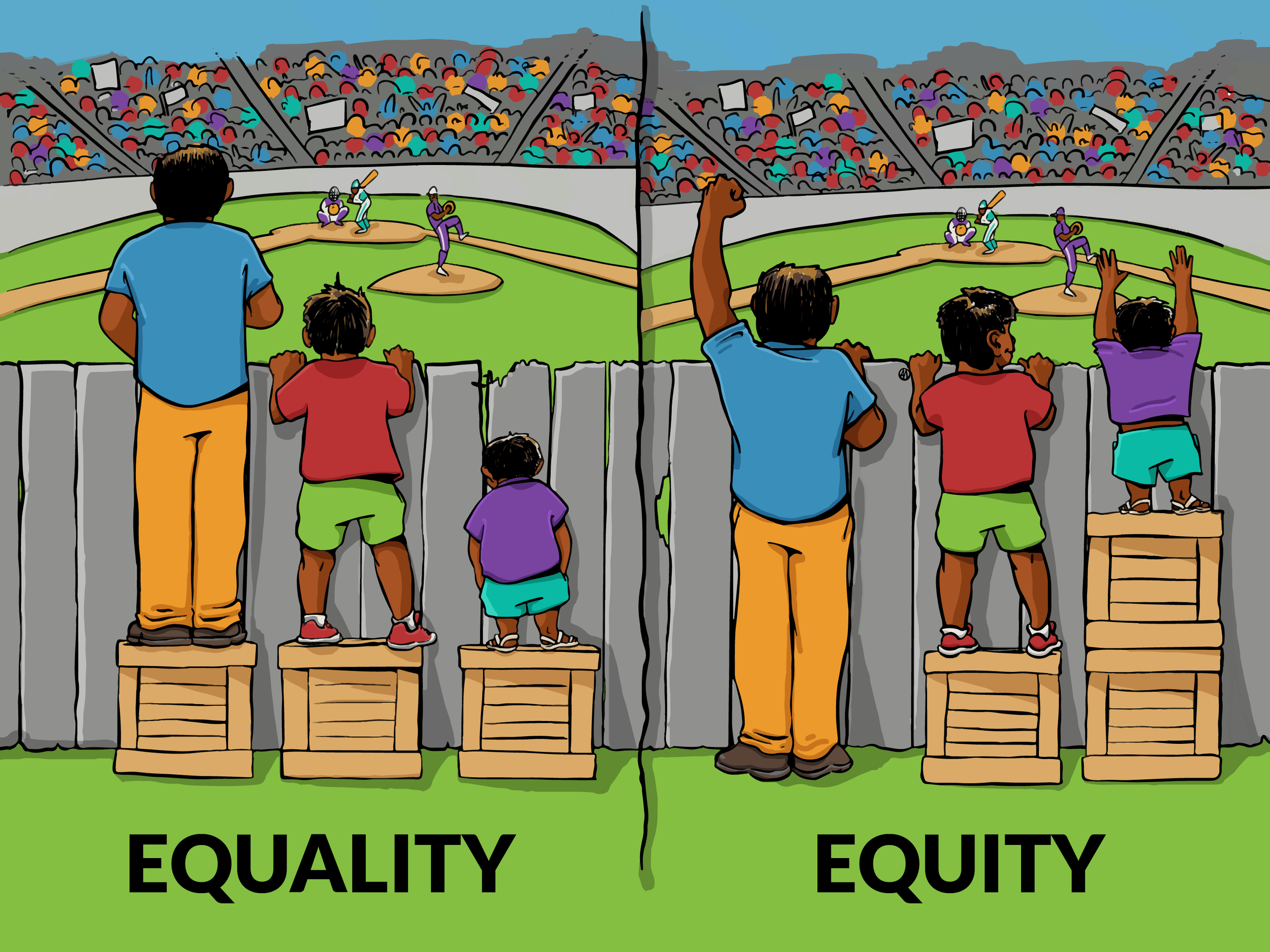
Equity in eLearning: Designing Digital Learning That Works for Adult Learners Introduction: Not Just Digital — Equitable
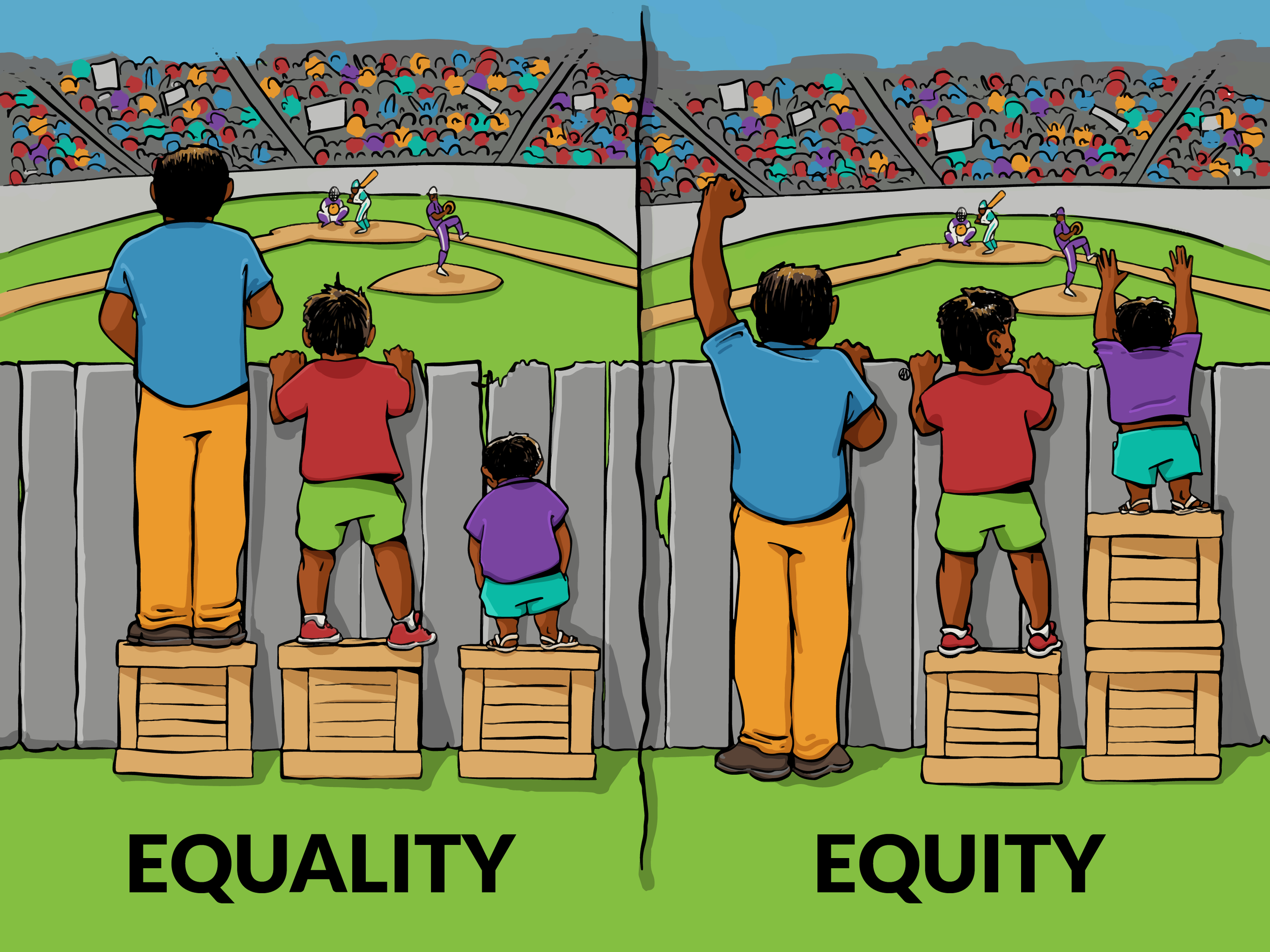
Source: Interaction Institute for Social Change Interaction Institute for Social Change As more adult education programs shift online, there’s a common misconception that providing access to technology equals equity. But as anyone who has designed eLearning for diverse adult learners knows, equity requires more than just a login and a Wi-Fi connection.
Digital access is a start — but equity is about ensuring the learning experience itself is responsive, relevant, and respectful of adult learners’ diverse identities, experiences, and needs.
Who Are Adult Learners, Really?
Adult learners are not a monolith. They include:
-
Career shifters and upskillers
-
Caregivers balancing family and work
-
Immigrants and multilingual learners
-
Veterans and returning citizens
-
First-generation college students
-
Older adults reentering formal education
Their lives are layered with responsibilities — and their learning journeys are often marked by both resilience and disruption.
💡 Equity starts with seeing adult learners as whole people, not just digital users.
Where Equity Breaks Down in eLearning
Here are common pitfalls that unintentionally create barriers in adult eLearning:
1. Assuming Comfort with Digital Platforms
Not all learners are tech-savvy, and some may experience shame when navigating complex systems.
🔧 Equity fix: Design simple, intuitive navigation and provide orientation or tech literacy support.
2. One-Size-Fits-All Content
Standardized, inflexible modules fail to account for learners’ varied prior knowledge, cultural references, and learning preferences.
🔧 Equity fix: Offer choices in pacing, format (video/audio/text), and application-based learning.
3. Ignoring Language Diversity and Literacy Levels
Many adult learners may be multilingual or still developing academic language skills.
🔧 Equity fix: Use plain language, captions, transcripts, and visuals. Avoid academic jargon.
4. Lack of Representation in Examples and Case Studies
When learners can’t see themselves in the content, engagement and trust decrease.
🔧 Equity fix: Integrate diverse voices, names, settings, and culturally relevant scenarios.
Designing with Equity at the Core
✔️ Start with Empathy Mapping
Ask: What are your learners feeling, seeing, and juggling outside the screen? Design with that context in mind.
✔️ Build in Flexibility, Not Just Deadlines
Allow grace for life events. Offer replays, extensions, and multiple paths to completion.
✔️ Use UDL (Universal Design for Learning) Principles
Multiple means of engagement, representation, and action ensure that all learners can access and express their learning.
✔️ Invite Feedback and Co-Creation
Include adult learners in the feedback loop. What worked? What didn’t? What felt empowering?
Final Thoughts: Equity Is a Design Choice
Equity in eLearning doesn’t happen by accident. It’s the result of intentional decisions that honor the dignity, context, and strengths of adult learners.
So, the next time you’re designing a course, ask yourself: Who is this really designed for? Who might be unintentionally left out?
💬 What are your strategies for designing equitable online learning for adults? Let’s share ideas and grow together.
#EquityInEducation #eLearningDesign #AdultLearning #InstructionalDesign #DigitalEquity #UDL #InclusiveLearning
-
-
What If Curriculum Was Designed to Be Iterative, Not Perfect?
Iterative Process Introduction: Let’s Redefine What “Finished” Means
In curriculum writing, there’s often this unspoken pressure to get everything perfect before sharing it with others. The pacing guide must be airtight. The objectives must align flawlessly. The assessments must check every box. But here’s a question I’ve been asking myself lately:
What if curriculum wasn’t meant to be perfect? What if it was meant to be iterative?
As someone who has worked on curriculum development in both traditional and alternative school settings—and recently gathered real feedback from educators in the field—I’ve realized that iteration is not a sign of weakness; it’s a mark of responsiveness. Curriculum should breathe, evolve, and grow alongside the learners and educators who use it.
Perfection is Static. Learning Isn’t.
The problem with perfection in curriculum design is that it assumes:
-
We’ve already anticipated every learner’s need.
-
The context won’t shift.
-
Feedback is unnecessary once the plan is written.
But classrooms are dynamic. Learners grow. Community needs shift. Standards change. And most importantly, real learning is messy, nonlinear, and deeply human.
A static curriculum can become irrelevant—or even harmful—if it doesn’t leave room for revision, responsiveness, and reflection.
What Iterative Curriculum Looks Like in Practice
Here’s what I’ve learned through experience and feedback:
1. It Includes Feedback Loops
Teachers, students, and instructional coaches should all have a voice. Think exit slips, informal teacher debriefs, or even anonymous surveys.
💡 Curriculum should be a conversation—not a monologue.
2. It Allows for Responsive Pacing and Content
Maybe a lesson on persuasive writing turns into a deep dive on student advocacy. Maybe a science unit shifts to include climate issues relevant to a local event. That’s not mission drift—that’s mission in action.
💡 Adaptation is a strength, not a detour.
3. It Encourages Mid-Year Recalibration
Rather than waiting for the summer to overhaul what didn’t work, iterative curriculum allows teams to pause, reflect, and revise throughout the school year.
💡 “Good enough to start” is better than “perfect but too late.”
4. It Prioritizes Teacher Voice and Agency
Teachers aren’t just implementers—they’re co-designers. An iterative model invites their professional judgment and classroom insights.
💡 Curriculum becomes stronger when it’s shaped by those using it daily.
Let’s Normalize Changing Course
We often teach students that learning involves revision, mistakes, and growth. But are we modeling that in how we design their learning experiences?
Let’s normalize:
-
Revisiting units’ mid-cycle.
-
Shifting texts when they’re not resonating.
-
Adapting pacing when life happens.
-
Building “pause and reflect” weeks into long-term plans.
Final Thoughts: The Courage to Keep Revising
Iteration takes courage. It requires humility, collaboration, and a willingness to admit: we’re still learning, too. But when we design curriculum as something alive—not locked—we create space for authenticity, responsiveness, and deeper learning.
So, here’s to curriculum that grows, flexes, and evolves—just like the learners it serves.
💬 Do you design your curriculum to be iterative? What practices help you reflect and revise? I’d love to hear from you.
#CurriculumDesign #InstructionalDesign #IterativeLearning #EquityInEducation #TeacherVoice #EducationLeadership
-
-

Why Equity in Curriculum Design Requires More Than Access

Pexels – Photo by Mikhail Nilov Introduction: Equity Isn’t Just a Buzzword
In recent years, the word equity has become a frequent fixture in educational spaces—from staff meetings to mission statements to curriculum design. But here’s what I’ve come to realize: equity isn’t just about access. It’s not enough to provide the same content to every student and assume that fairness has been achieved.
As someone who has designed curriculum for diverse learners, collaborated with teachers in behaviorally challenging settings, and reflected deeply on culturally responsive education, I’ve learned that real equity requires intentional, responsive, and inclusive design choices.
Access is Only the Beginning
Let’s start here: access matters. Every student deserves access to high-quality content, resources, and instruction. But equity doesn’t stop at giving everyone the same textbook or online platform.
If students can’t engage meaningfully with the material because it wasn’t designed with their realities in mind, then we haven’t achieved equity—we’ve just delivered uniformity.
Equity in Curriculum Means Meeting Students Where They Are
1. Skill Gaps Must Be Acknowledged and Addressed
Too many students enter classrooms with significant gaps in literacy or foundational knowledge—and then we give them grade-level tasks without scaffolding.
💡 Equity requires us to ask: What do my students need to access and succeed with this task?
-
Pre- and post-diagnostics should be a part of every curriculum design cycle.
-
Content must be layered to support multiple entry points.
-
Growth should be measured as much as mastery.
2. Representation Should Be Authentic, Not Tokenized
A truly equitable curriculum reflects the voices, histories, and experiences of all students—not just during heritage months or as sidebars in a textbook.
💡 Equity requires us to ask: Who is centered in this material? Who is missing?
-
Literature, writing prompts, and examples should include diverse cultural narratives.
-
Students should see themselves as creators, not just recipients, of knowledge.
3. Pacing and Feedback Should Be Flexible
Equity also means recognizing that learners need different timelines and feedback to grow.
💡 Equity requires us to ask: Am I designing for mastery or compliance?
-
Build in revision cycles, check-ins, and opportunities for student voice.
-
Offer multiple ways to demonstrate understanding—projects, visuals, audio, writing.
Equity is a Practice, Not a Policy
Equity in curriculum design isn’t a checkbox. It’s a commitment to designing with students in mind—not for an imaginary average learner.
It’s a mindset shift: from “What’s in the curriculum?” to “Who is this curriculum really serving?”
Final Thoughts: Let’s Keep Redesigning
If we want to build truly equitable classrooms, we have to keep asking better questions, revisiting our assumptions, and being open to redesign. Equity requires courage, creativity, and constant iteration.
So, let’s move beyond access. Let’s build curriculum that supports, reflects, and uplifts every learner.
💬 How do you design with equity in mind? What practices help you move beyond access? I’d love to hear your thoughts.
#CurriculumDesign #EquityInEducation #InclusiveLearning #CulturallyResponsiveTeaching #InstructionalDesign
-
-
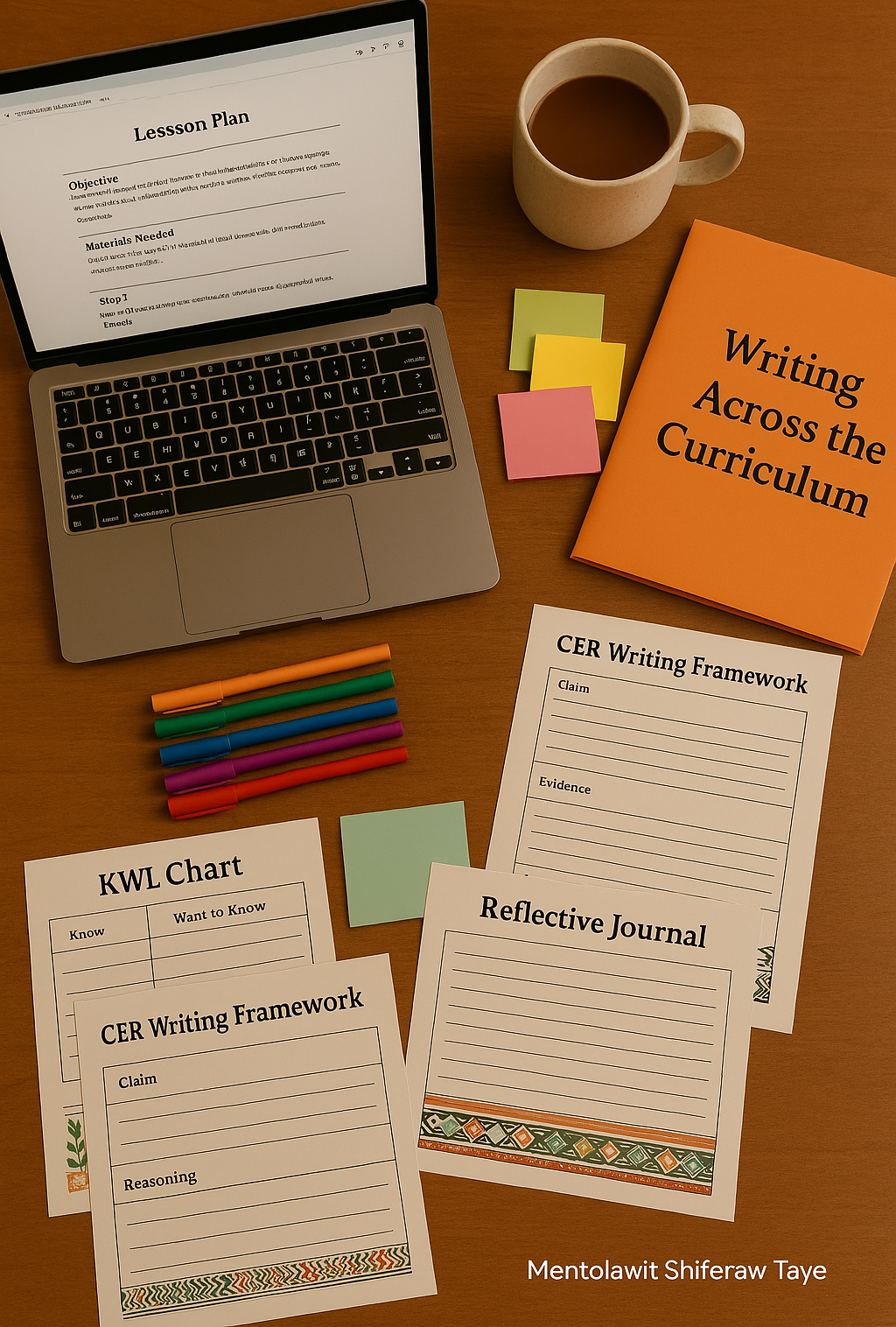
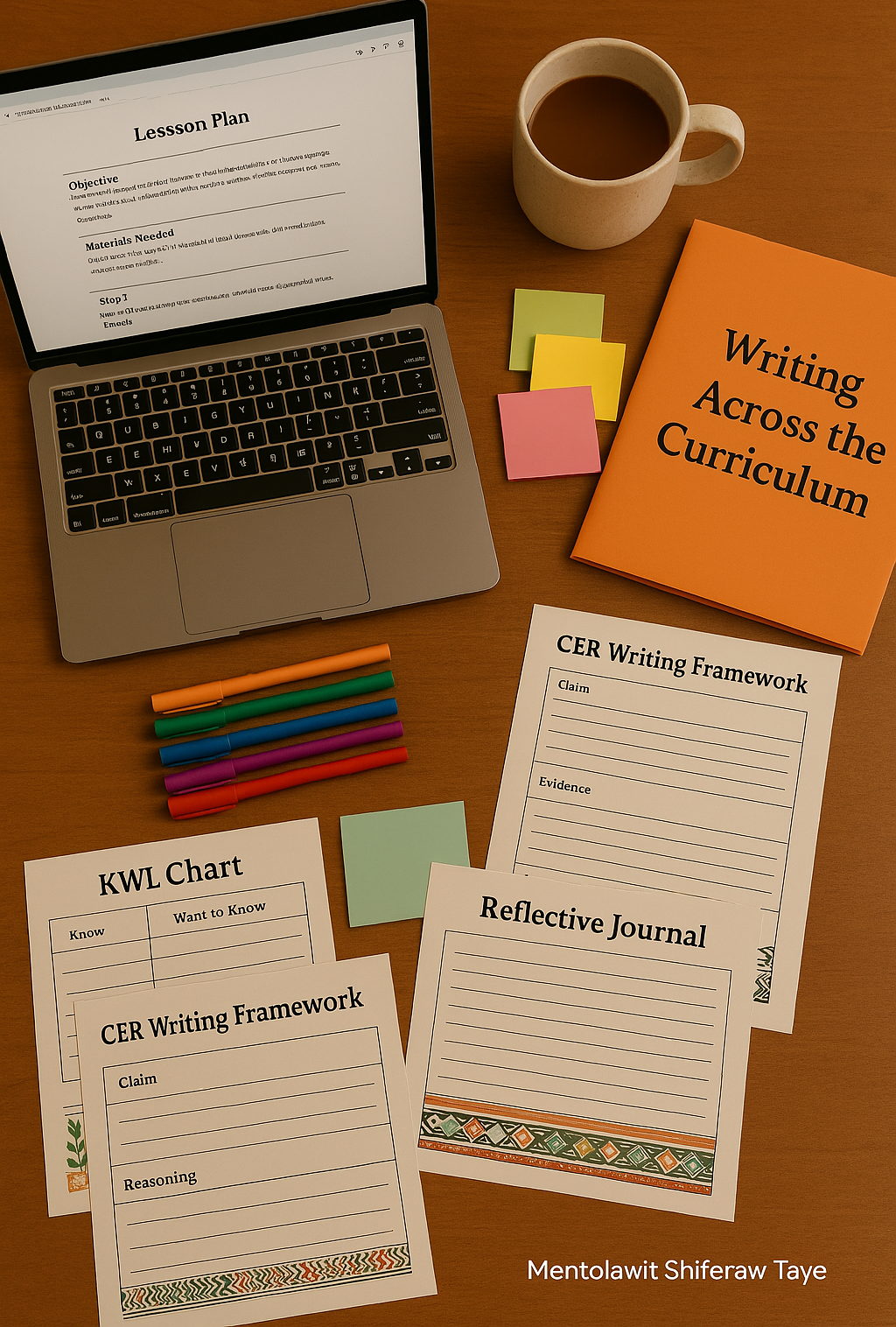
Designing with Purpose: Behind the Scenes of My Writing Across the Curriculum Course
#WritingAcrossTheCurriculum Intro: Why Writing, Why Now?
When I first set out to design my “Writing Across the Curriculum” course, I knew I wasn’t just creating a resource. I was filling a gap I had seen throughout my years in education: the need for intentional, accessible writing strategies across all grade levels and subjects. Writing is more than a literacy standard—it’s a tool for thinking. And yet, many teachers either feel unprepared to teach writing outside of ELA or unsure how it fits into their discipline.
The Vision: Writing as Thinking
This course began with a simple but powerful idea: writing makes student thinking visible. Whether you’re teaching first-grade science or high school PE, the act of writing helps students organize ideas, reflect, and connect. My goal was to design a course that equips educators with the tools, confidence, and inspiration to weave writing into everyday instruction.Tailoring for Different Teaching Levels
One of the biggest challenges (and joys!) was making the course responsive to different grade bands. I didn’t want to offer vague strategies that didn’t feel applicable. So I built differentiation right into the course structure:-
For K–5, writing looks like journaling with drawings, sentence starters, and verbal reflections.
-
For grades 6–8, writing grows into structured responses, paragraph frames, and content-based arguments.
-
By grades 9–12, students engage in full lab reports, persuasive essays, and reflective critiques.
Each module includes examples tailored to these levels, so every teacher can see themselves and their students in the strategies.
The Build-Out: Structure, Tools, and Templates
I organized the course into five modules, each focusing on a key element of WAC:-
Foundations of Writing Across the Curriculum
-
Writing Strategies by Subject Area
-
Integrating Technology & AI in Writing
-
Assessment & Feedback
-
Schoolwide Implementation
For each lesson, I created:
-
Full lesson scripts
-
Editable slide decks
-
Downloadable templates (e.g., CER guides, mini-lesson planners, mentor text organizers)
-
Student writing models
-
Differentiated prompts by subject and grade level
The goal was to make it plug-and-play for busy teachers while still honoring the complexity of good writing instruction.
Lessons Learned Along the Way
Throughout the process, I was reminded that clarity matters more than perfection. It’s better to offer one strong, usable strategy than ten overwhelming ones. I also realized how empowering it can be to frame writing as a tool for equity and expression—not just assessment.And perhaps most importantly, I saw how universal the need is. Teachers want to support better writing. They just need guidance, encouragement, and realistic ways to begin.
What’s Next?
Right now, this course is still in development and will soon be hosted on the course section of my Squarespace site. It began as part of a professional development journey, but I’m already imagining future versions—maybe a full platform, a community for teachers, or even micro-courses by subject area.Final Thoughts: A Personal Win
This course represents a return to something I love: designing learning experiences that matter. It’s not perfect, but it’s purposeful. And if it helps even one teacher bring writing to life in a new way, it’s a win.Want a peek inside the course? I’m happy to share templates, slides, or lesson outlines—just reach out!
#WritingAcrossTheCurriculum #InstructionalDesign#CourseCreation#TeacherTools#EduInnovation -
-

Writing Across the Curriculum: Bridging Skill Gaps and Promoting Equity

Introduction: A Missed Opportunity in Curriculum Design
As I work on developing an online course focused on Writing Across the Curriculum, I’ve come across valuable insights from educators working with diverse groups of students. One particular conversation with a teacher at a satellite school serving behaviorally challenging learners highlighted a significant gap in writing instruction.
Far too often, standardized curricula focus on academic skills without acknowledging the unique needs of students who struggle with foundational skills. High school educators are frequently tasked with reteaching basic writing skills to students who have been left behind by the system. The question is: how do we bridge these gaps while promoting equity and inclusivity?
Why Traditional Writing Instruction Falls Short
Writing instruction that emphasizes standardized outcomes and uniform skill levels tends to leave many students behind. Common issues include:
-
Skill Gaps: Students enter high school without the foundational writing skills needed to meet grade-level expectations.
-
Lack of Diagnostic Tools: Without pre- and post-assessments, it’s difficult to identify specific needs and measure growth.
-
Cultural Disconnect: Standardized instruction often overlooks the diverse cultural backgrounds of students.
-
Focus on Deficits: A deficit-focused approach can demoralize students rather than empower them.
These gaps aren’t just academic. They impact student confidence, emotional wellness, and willingness to engage in writing.
Practical Strategies for Bridging the Gaps
1. Use Pre- and Post-Diagnostics to Identify Needs
Assessing students before and after instruction helps teachers:
-
Customize instruction to address specific skill gaps.
-
Measure progress and celebrate growth.
-
Build student confidence through measurable success.
2. Implement Culturally Relevant Teaching
Recognizing students’ cultural backgrounds can transform writing instruction:
-
Use diverse reading materials and writing prompts.
-
Allow students to incorporate personal experiences into their writing.
-
Promote inclusivity by valuing all voices.
3. Adopt Strength-Based Approaches
Highlighting what students do well can empower them to grow:
-
Celebrate strengths rather than only focusing on weaknesses.
-
Encourage creativity and personal expression.
-
Provide opportunities for peer collaboration and feedback.
4. Create Participant-Centered Instruction
Effective writing instruction requires active participation:
-
Encourage students to set personal goals and reflect on progress.
-
Foster collaboration through peer reviews and group activities.
-
Integrate SEL principles to support emotional and academic growth.
Moving Towards True Equity
Creating a more inclusive approach to Writing Across the Curriculum requires acknowledging the gaps and actively working to close them. By incorporating diagnostic tools, embracing cultural relevance, highlighting strengths, and designing participant-centered instruction, we can make writing instruction accessible and impactful for all learners.
💡 How are you addressing skill gaps and promoting equity in writing instruction? Share your thoughts and experiences below!
#WritingAcrossTheCurriculum #EquityInEducation #InclusiveLearning #CulturallyResponsiveTeaching #InstructionalDesign #SEL
-
-

Why SEL Deserves a Central Place in Curriculum Design

#SEL Introduction: The Overlooked Element in Curriculum Writing
As an instructional designer working on an online course focused on Writing Across the Curriculum, I’ve been collecting insights from various professionals in the field. But it was a conversation with my sister -in – law; a close friend—Director of Student Wellness and Advocacy for Durham Public Schools that truly opened my eyes to a critical gap in curriculum development.
Too often, when we talk about curriculum writing, the focus is on academic subjects—language arts, math, science, social studies. The structure, standards, assessments, and learning objectives are all laid out meticulously. But something essential is frequently left out of the equation: Social-Emotional Learning (SEL).
The irony? SEL is the very foundation that supports all those other subjects. And when it’s neglected, the overall health of the school environment—and the students’ ability to thrive—suffers.
Why SEL Can’t Be an Afterthought
Social-Emotional Learning is more than just a trendy buzzword. It’s a critical component of education that addresses emotional maturity, psychological wellness, interpersonal skills, and personal growth. When schools fail to integrate SEL into the core curriculum, they miss out on the opportunity to address essential developmental needs.
Here’s what happens when SEL is treated as an afterthought:
✔ Emotional Maturity is Stunted: Without proper SEL integration, students are left to navigate complex emotions on their own, often leading to frustration, anxiety, or social withdrawal.
✔ Adolescents Lack Proper Guidance: As children grow into teenagers, their emotional needs become more nuanced. A curriculum that doesn’t address their social and emotional growth leaves a critical gap in their education.
✔ Psychological and Physiological Wellness Suffer: From managing stress to building resilience, SEL teaches skills that contribute to both mental and physical health. When ignored, it leaves students vulnerable to burnout, anxiety, and disengagement.
The truth is, SEL is not an “extra”—it’s essential.
Why SEL Belongs at the Center of Curriculum Design
When we think about curriculum writing, we should be asking ourselves: What is the end goal?
Is it simply to impart knowledge? Or is it to equip students with the skills and emotional resilience they need to thrive in all areas of life?
SEL addresses core areas that traditional academic curricula often miss:
✔ Self-awareness: Helping students understand their emotions, strengths, and areas of growth.
✔ Self-management: Teaching skills like impulse control, stress management, and goal setting.
✔ Social awareness: Building empathy and promoting an understanding of diverse perspectives.
✔ Relationship skills: Enhancing communication, teamwork, and conflict resolution.
✔ Responsible decision-making: Encouraging thoughtful, ethical, and practical decision-making.
Without these foundational skills, academic success alone is not enough. SEL is the glue that holds everything together—and it deserves to be treated as such.
Integrating SEL into Curriculum Writing
So, how do we ensure that SEL becomes a central part of curriculum design rather than a peripheral topic?
1️. Incorporate SEL Objectives Alongside Academic Standards: Every lesson plan should include not only content objectives but also SEL goals. What emotional, interpersonal, or decision-making skills should students be building as they engage with the material?
2️. Provide Professional Development for Teachers: Teachers need the tools and training to implement SEL strategies effectively. Schools should invest in ongoing SEL training to ensure integration is authentic and practical.
3️. Create Culturally Responsive SEL Resources: SEL must be inclusive. Ensuring that SEL materials reflect diverse experiences and perspectives is essential for making students feel seen and valued.
4️. Assess SEL Growth: Just as we assess academic progress, we should also evaluate SEL development. Providing feedback and growth opportunities for SEL skills should be part of the educational process.
Final Thoughts: Making SEL a Priority, Not an Afterthought
What I’ve come to understand through my conversations and research is that SEL is not a luxury—it’s a necessity. If we want students to thrive, we must place SEL at the center of curriculum writing, not treat it as a footnote.
It’s time for schools, curriculum developers, and instructional designers to take a serious look at how we approach SEL. Because without it, we’re not providing a complete education.
💡 How are you integrating SEL into your curriculum design? What challenges or successes have you experienced? I’d love to hear your thoughts.
#SEL #CurriculumDesign #SocialEmotionalLearning #EducationReform #InstructionalDesign
-
When Teachers’ Beliefs Limit Students: The Problem with One-Size-Fits-All Learning
The Unspoken Bias in Classrooms
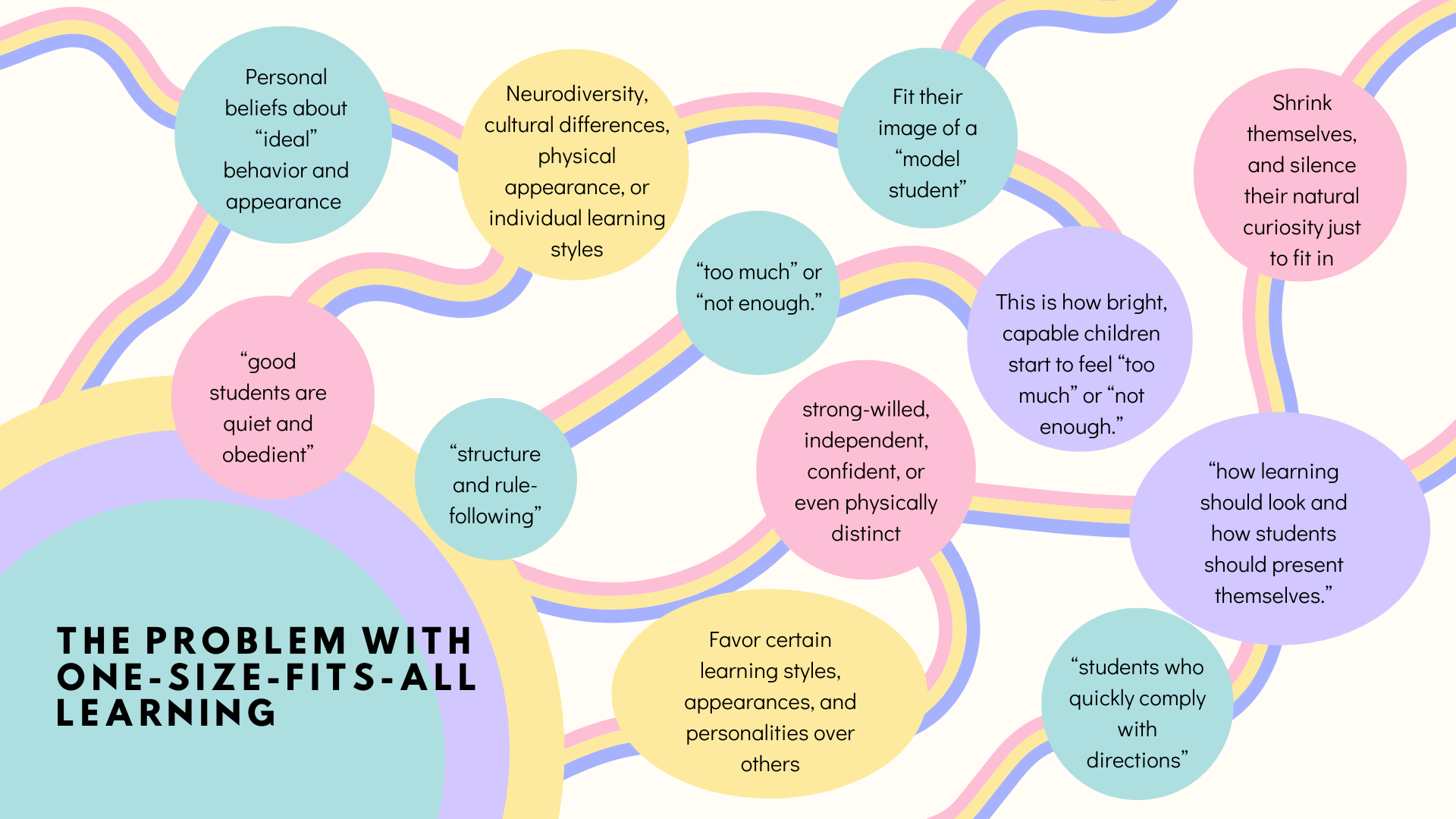
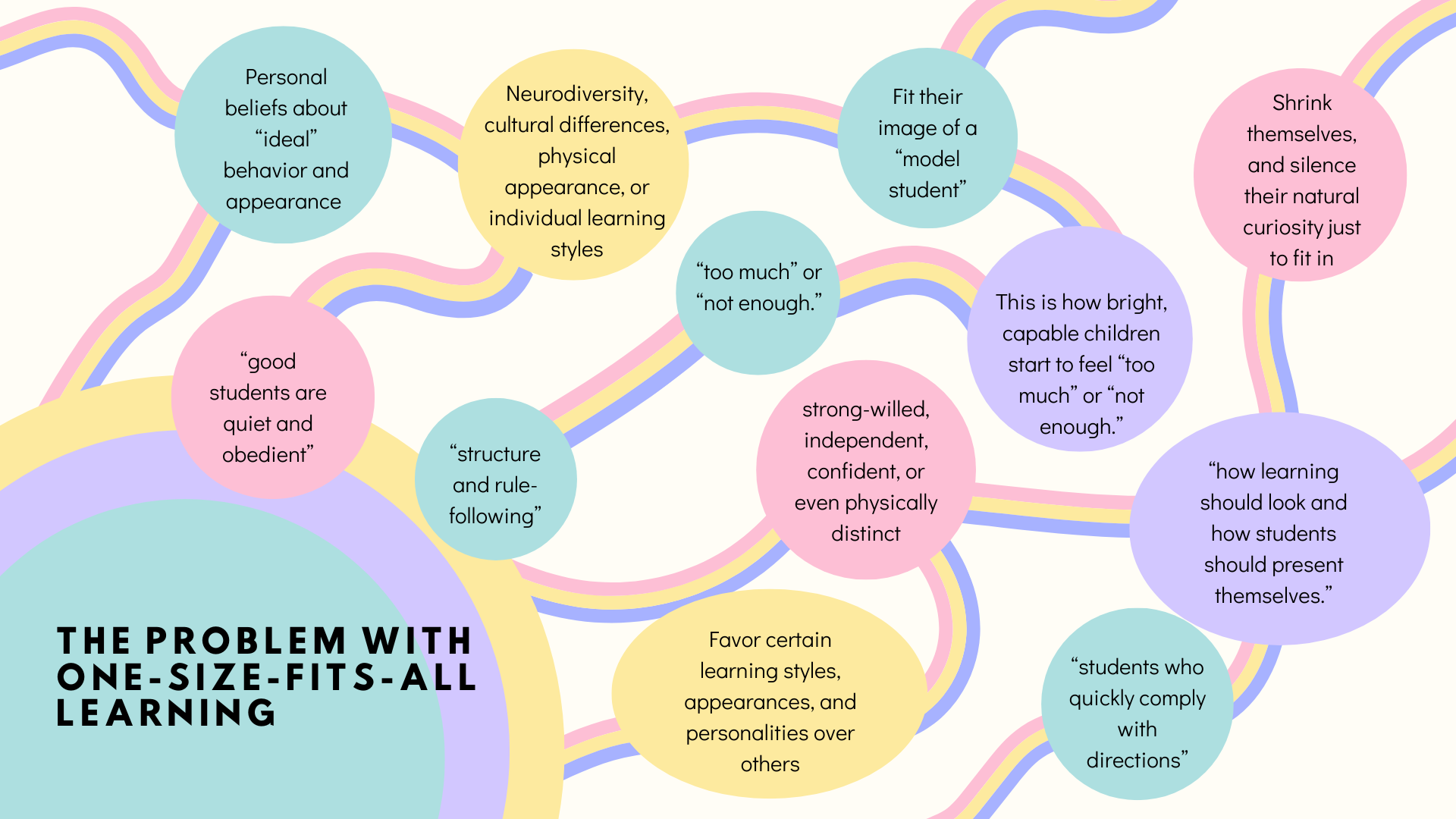
As parents, we trust teachers to nurture, guide, and educate our children. We expect them to create environments where all students feel seen, valued, and understood. But what happens when a teacher’s personal beliefs about “ideal” behavior and appearance create friction in the classroom? What if the qualities they view as positive—quiet compliance, deference, structured thinking—don’t match the personality, appearance, or learning style of every child?
I’ve seen how teachers’ beliefs about how children should behave and even how they should look can impact their willingness to accept different approaches to learning. When a child is strong-willed, independent, confident, or even physically distinct, those qualities should be celebrated, but instead, they often create strain in classrooms where conformity is the expectation.
The problem arises when teachers view these traits as problems to be corrected, rather than strengths to be understood. In some cases, the child may never break a rule or show disrespect, but simply learn and engage in ways that are different from the teacher’s expectations. This friction often arises not from a student’s behavior but from a teacher’s belief about how learning should look and how students should present themselves.
The Hidden Impact of Teacher Expectations
Teachers, like all of us, carry implicit beliefs about how students should behave, look, and learn. These beliefs—shaped by personal experiences, training, and societal expectations—can unintentionally favor certain learning styles, appearances, and personalities over others.
✔ Some teachers believe “good students” are quiet and obedient—but what about those who process information by engaging in discussion and asking questions?
✔ Some teachers value structure and rule-following—but what about students who thrive in creative, exploratory learning environments?
✔ Some teachers reward students who quickly comply with directions—but what about those who need time to process and think critically before responding?
✔ Some teachers unconsciously favor children who fit their image of a “model student”—whether based on dress, looks, demeanor, or other superficial qualities.When teachers impose rigid expectations, students who don’t fit that mold face unnecessary challenges—not because they are failing, but because the system isn’t flexible enough to accommodate them. This is how bright, capable children start to feel “too much” or “not enough.”
When a One-Size-Fits-All Approach Fails
The biggest issue with rigid classroom expectations is that they don’t account for neurodiversity, cultural differences, physical appearance, or individual learning styles.
Children who exhibit confidence, independence, and critical thinking skills shouldn’t be seen as problems to manage. They are students with unique strengths that could be cultivated if met with understanding rather than resistance.
Yet, many children face resistance when their approach to learning challenges a teacher’s personal belief of what “good behavior” or “appropriate appearance” looks like. Instead of embracing their individuality, they are pressured to conform.
And the sad truth is, not all kids push back. Many internalize the pressure, shrink themselves, and silence their natural curiosity just to fit in. And that’s the real harm.
What Needs to Change?
1️. Teachers must reflect on their own biases. Recognizing how personal beliefs about behavior, learning, and appearance shape expectations is the first step in making classrooms more inclusive.
2️. Classrooms should celebrate diverse learning styles and personal expressions. Not all students learn or present themselves the same way—collaboration between students and teachers can lead to more meaningful learning experiences.
3️. Schools must provide professional development on flexible teaching strategies. Encouraging adaptability in the classroom benefits both students and teachers.
4️. Parents and educators need to work together. Instead of forcing students to fit into rigid molds, we should advocate for environments that allow them to thrive as they are.
Final Thoughts: Encouraging Student Growth Without Forcing Conformity
Education should empower students to be their authentic selves—not pressure them into shrinking to fit an outdated ideal. When teachers resist flexibility, they unintentionally stifle curiosity, confidence, and individuality.
Many children won’t push back when faced with rigid expectations. They will adjust to meet them, even when it means losing a part of themselves in the process.
That’s why we need to have this conversation. If we truly believe in student-centered education, we must be willing to challenge the beliefs that shape our classrooms.
#Education #BiasInTeaching #InclusiveClassrooms #StudentCenteredLearning #DiversityInEducation