Category: Uncategorized

  • When Representation Misses the Mark: A Reflection on My Son’s Classroom Experience
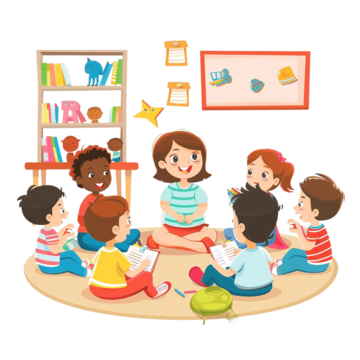
    When Representation Misses the Mark: A Reflection on My Son’s Classroom Experience

    When Representation Misses the Mark: A Reflection on My Son’s Classroom Experience

    “Mom, did you have to walk miles to get water when you were little?”

    My son asked me this after a reading circle in his fourth-grade class. His teacher had chosen a book about an Ethiopian girl walking long distances to fetch water. And as an Ethiopian American, my son sat there, listening—processing what this meant about his own heritage.

    The problem? I never had to fetch water. I grew up in the Ethiopian capital city with running water, education, and privilege. But my son—born and raised in the U.S.—was now left wondering if his mother’s childhood looked like the generalized struggles portrayed in that book.

    I understand the importance of teaching gratitude. But was this book truly culturally responsive, especially for the two Ethiopian heritage students in the room? Wouldn’t it have been more meaningful to choose a book that reflected a broader and more accurate narrative of Africa?

    Representation in literature matters—especially in schools. But when educators default to single-story narratives, we risk misrepresenting entire cultures while reinforcing outdated stereotypes.

    A Personal Story That Sparks a Bigger Question

    In third grade, my middle son sat in his classroom’s reading circle, following along as his teacher read aloud from a book about an Ethiopian girl walking miles to fetch water. As an Ethiopian American, my son listened—processing what this meant about his own heritage. And at some point, he must have wondered: Did my mother grow up like this? Did she have to walk for water too?

    Only I didn’t. Like many urban Ethiopians, I grew up privileged, with running water, access to education, and experiences that didn’t match the narrative being presented to my son and his classmates.

    The book’s message was clear: Be grateful for what you have, because others don’t have as much. I understand the importance of gratitude, but the bigger question is: Is this kind of representation actually helping children understand cultural diversity, or is it reinforcing narrow, stereotypical views?


    The Issue with a Single Story About Africa

    The classroom experience my son had isn’t unique. Too often, African stories in American schools focus on poverty, struggle, or lack—perpetuating the idea that Africa is a continent of suffering. Rarely do these books show modern cities, innovation, or the diverse cultures that make up African countries.

    This is the problem with what author Chimamanda Ngozi Adichie calls “The Danger of a Single Story.” When students are repeatedly exposed to one narrative about a place or culture, they internalize it as the only truth.

    ✔ Where are the books about Ethiopian scientists, entrepreneurs, or artists?
    ✔ Where are the stories about urban life in Addis Ababa, tech hubs, and cultural festivals?
    ✔ Why do educators often default to books that reinforce outdated, generalized narratives?

    Meanwhile, these same schools ask families to participate in canned food drives and gently used clothing collections for underserved communities here in the U.S. If the goal is to teach children about gratitude and privilege, wouldn’t it be more relatable to choose a book about struggling families in their own communities?


    Why Culturally Responsive Teaching Matters

    Books shape how children see the world—including how they see their classmates. When educators fail to consider the impact of representation, they unintentionally:

    Make children of that background feel othered—Instead of seeing their rich, complex heritage reflected, they see only a story of struggle.
    Give classmates an incomplete view of the world—Reinforcing outdated, simplistic, or even misleading narratives.
    Miss the opportunity to foster real cultural awareness—Diversity in literature should be truly representative, not just reinforcing what’s comfortable or familiar.

    Representation isn’t just about including books about different cultures—it’s about choosing the right ones that provide a balanced view of a place or people.


    How Schools Can Do Better

    Choose books that reflect a full range of experiences, not just struggle narratives.
    Incorporate diverse perspectives from multiple African countries and cultures.
    Use modern stories that showcase real, everyday life in places beyond Western perspectives.
    Train educators on culturally responsive teaching so they can critically evaluate the messages books convey.
    Expand gratitude and privilege lessons beyond the default third-world stereotype—there are struggles and triumphs everywhere.


    Conclusion: Representation with Intention

    This is not about avoiding stories of hardship or struggle. It’s about balancing them with stories of success, resilience, and everyday life. It’s about broadening the lens so that children of diverse backgrounds can see themselves reflected accurately—and their peers can understand their world more fully.

    My son left that lesson wondering if his mother once had to walk miles for water. What if, instead, he had learned about Ethiopia’s rich history, its cities, or its contributions to the world?

    Representation matters. Let’s make sure we’re getting it right.

    Have you seen culturally unbalanced narratives in schoolbooks? What are some better book recommendations? Let’s discuss!

    #Education#CulturallyResponsiveTeaching #RepresentationMatters #DiverseBooks    #InclusiveEducation
     

  • From 9-to-5 to Limitless: How I Discovered the Business Side of Education

    From 9-to-5 to Limitless: How I Discovered the Business Side of Education

    The ‘Jealousy’ That Changed My Mindset

    For years, I thought education was only a 9-to-5 job—until I realized my skills, experience, and knowledge could open up endless opportunities.

    For over 13 years, I watched my husband, a professor and saxophonist, turn his expertise into multiple income streams. Meanwhile, I believed education was a single paycheck job. But what if I was wrong?

    For over 13 years, I watched my husband—a professor and saxophonist—effortlessly turn his expertise into multiple income streams. He gigged, led professional development workshops, recorded music, and built a career that never felt tied to a single paycheck. Meanwhile, I stuck to the belief that education was a 9-to-5 profession—one where I had a fixed salary, a single job title, and little flexibility to expand beyond that.

    And honestly? I was jealous.

    Not in a resentful way, but in a way that made me question: Why can’t I do the same in education?

    I always thought, I’m just an educator. My job is what it is. But now, I see that education can be just as multi-faceted as any other field. My skills, experience, and knowledge aren’t limited to a single role. They are valuable, adaptable, and, yes—marketable.

    Here’s how I broke out of the 9-to-5 mindset and started seeing education as a field full of possibilities rather than limitations.


    Breaking the ‘9-to-5 Only’ Mentality in Education

    For years, I thought of my career in a fixed way: you get a teaching degree, find a stable job in a school or institution, work within a set schedule, and eventually retire. That’s the standard path, right?

    But then I looked at my husband’s world. He didn’t see his career as just “one job.” Instead, he saw his expertise as a product—something that could be shared, taught, performed, and monetized in multiple ways. He gigged, recorded, taught, consulted, and even spoke at conferences.

    That’s when it hit me: Why don’t educators think this way?

    Musicians, artists, entrepreneurs—even fitness trainers—see their skills as marketable beyond one paycheck. Meanwhile, many educators (myself included) get stuck in the idea that our skills only have value within the walls of a single institution. But that’s simply not true.

    “Education isn’t just a job—it’s a profession full of opportunities.”


    The Hidden Skills of Educators That Can Generate Income

    As I started to explore what I could do outside of my traditional job, I realized I had so many skills that could translate into new opportunities. Here are just a few that educators often overlook:

    Curriculum Development → Consulting for Schools & EdTech CompaniesInstructional Design → Online Course Creation & E-LearningTeaching & Public Speaking → Professional Development WorkshopsContent Writing → Educational Blogs, Books, and Digital ResourcesTechnology in Education → AI & EdTech Integration for SchoolsOne-on-One Support → Tutoring, Coaching, and Mentorship

    The skills we use every single day in classrooms and education spaces are valuable beyond our primary jobs. We already have the expertise—we just need to learn how to package it differently.


    My Shift: From Fixed Mindset to an Open Career Path

    The moment I truly embraced the idea of multiple income streams, everything changed.

    I stopped seeing my job as my only professional identity and started seeing my expertise as something expandable—something that could exist in multiple spaces, just like my husband’s career did.

    ✔ I started exploring consulting opportunities in curriculum design.
    ✔ I looked into professional development workshops that I could lead.
    ✔ I began writing and designing resources for other educators.
    ✔ I connected with other professionals who had successfully transitioned out of the traditional education space.

    And guess what? It worked.

    Opportunities started appearing because I positioned myself differently. I no longer felt boxed into one role—I saw my career as a collection of valuable skills that could be used in different ways.


    A Call to Action for Educators: Step Beyond the Paycheck

    I know I’m not the only educator who has felt “stuck.” So, to anyone reading this who has ever thought, This is all I can do—I challenge you to think bigger.

    🚀 What skills do you already use that could generate new opportunities?
    🚀 What passions have you overlooked because you assumed they couldn’t be profitable?
    🚀 What would happen if you saw your career the way an artist, entrepreneur, or musician sees theirs?

    Education is not just a 9-to-5—it’s a profession full of creativity, innovation, and yes, income-generating possibilities. It’s time we start thinking like it.

    Let’s continue the conversation—what’s one skill you have that could turn into an opportunity beyond your current role? Drop a comment below!

    #Education #TeacherEntrepreneurs #CurriculumDesign #InstructionalDesign #MultipleStreamsOfIncome

  • Why Names, Identity & Boundaries Matter in Education

    Why Names, Identity & Boundaries Matter in Education

    Inclusion Is More Than a Word: The Power of Names, Boundaries, and Belonging

    Names carry stories. They hold history, meaning, and identity. Yet too often, they are mispronounced, shortened, or brushed aside—not because they are difficult, but because people don’t try.

    As a parent, I see this firsthand. My sons have beautifully rich ethnic names, yet too often, they are mispronounced or dismissed as ‘too hard’ to say. But their names are not optional. They are not nicknames to be assigned at random. They deserve to be spoken correctly, with care and respect—just like anyone else’s.

    Beyond names, I’ve also watched them navigate another common experience—curiosity that crosses into personal space. Other children, fascinated by their textured hair, reach out to touch it, often without asking. While the interest might be innocent, the impact is not always comfortable. Children shouldn’t have to feel like a science experiment. They should be able to move through the world without being prodded, examined, or made to feel ‘different.’

    What Does True Inclusion Look Like?

    It’s about trying. Trying to say a name correctly, even if it takes practice. Trying to understand that hair, skin, and culture are not curiosities for others to investigate but parts of someone’s identity to respect.

    It’s about teaching awareness. Helping children (and adults) recognize that asking first matters. That listening and learning are acts of respect. That inclusion isn’t just about welcoming people—it’s about making sure they feel seen, valued, and safe.

    This isn’t just about my sons—it’s about the countless individuals who face the same experiences every day. Names matter. Boundaries matter. Respect matters. And if we truly believe in inclusion, then it’s time to do the work—to get names right, to respect personal space, and to create environments where everyone feels like they belong.

    #Inclusion, #RepresentationMatters, #Education, #CulturalAwareness, #Diversity

  • My Journey Back to Education After a Career Break—What I Wish I Knew

    My Journey Back to Education After a Career Break—What I Wish I Knew

    The Decision to Return

    After dedicating years to my career in teaching, curriculum development, instructional design, and education effectiveness, I made the decision to step away from full-time work to focus on raising my children. It was a choice I don’t regret, but like many professionals who take a career break, returning felt daunting.

    I worried:
    ✅ Would my skills still be relevant?
    ✅ How would I explain the career gap on my resume?
    ✅ Could I keep up with the latest trends in education and instructional design?
    ✅ Would potential employers or clients view my break as a weakness?

    Looking back, I realize I was not alone in these concerns. Many educators, instructional designers, and consultants take breaks for family, personal growth, or other commitments. If you’re in this position, you can absolutely make a successful return—but there are things I wish I had known before I started.

    Lesson #1: Your Skills Are More Relevant Than You Think

    One of my biggest fears was that I had fallen behind. But as I started reviewing job postings, networking, and talking to colleagues, I realized that my core skills were still in high demand.

    Curriculum development remains essential in education and corporate learning.
    Instructional design continues to evolve, but foundational principles like backward design, Bloom’s taxonomy, and UDL are timeless.
    Educational effectiveness & assessment are still critical for schools and organizations.

    💡 What I Wish I Knew: Instead of doubting myself, I should have started with a skills inventory—listing all the ways my experience still applied to today’s educational landscape.

    Tip: Even if you’ve been away, your problem-solving skills, leadership, and instructional expertise haven’t disappeared! You may just need to refresh your knowledge of new tools and trends.

    Lesson #2: Take a Core Course to Refresh Your Knowledge

    One of the best decisions I made in my return was taking a core course through Educator Forever.

    Why? It provided a structured, up-to-date learning experience that helped me get back on track.
    What I Gained: Practical strategies in curriculum design, instructional coaching, and new trends in education.
    Biggest Benefit: It boosted my confidence and provided instant credibility when applying for jobs and consulting work.

    💡 What I Wish I Knew: Taking one high-quality course is more impactful than trying to self-teach everything at once.

    Tip: If you’re re-entering education, enroll in a focused course that aligns with your career goals—whether it’s curriculum design, EdTech, or instructional leadership. It’s an investment that pays off!

    Lesson #3: Networking is Your Biggest Asset

    During my career break, I lost touch with some professional connections. I assumed that job searching was about applying to positions, but I quickly realized that networking is more powerful than any resume.

    How I Rebuilt My Network (and How You Can Too!)

    I reached out to former colleagues – They offered insights, references, and opportunities.
    I engaged on LinkedIn – Sharing my expertise and interacting with educators helped me re-establish credibility.
    I joined professional communities – Online groups in curriculum design and instructional effectiveness opened doors to consulting work.
    I attended virtual networking events – Engaging in Educator Forever’s networking spaces, instructional design webinars, and K-12 curriculum conferences helped me connect with like-minded professionals.

    💡 What I Wish I Knew: I didn’t have to restart alone. A strong network can accelerate your return, whether you want to find a job or start consulting.

    Tip: If you’ve been away for a while, start reconnecting by commenting on posts, sharing insights, and joining virtual meetups in your field.

    Lesson #4: Consulting & Freelancing Can Be a Smart Way to Re-Enter

    At first, I assumed returning to education meant finding a full-time job. But through networking, I discovered consulting and freelance opportunities that gave me flexibility and helped me ease back in without committing to a rigid schedule.

    Curriculum development projects for schools and educational companies.
    Instructional design contracts for online course providers.
    Teacher professional development sessions on curriculum alignment.

    💡 What I Wish I Knew: I didn’t need a traditional job to re-establish my career. Freelance and contract work allowed me to update my portfolio, build confidence, and gradually transition back into the field.

    Tip: If full-time work feels overwhelming, explore short-term projects, part-time roles, or consulting. You can rebuild your career on your own terms.

    Lesson #5: Confidence Comes with Action, Not Perfection

    For a long time, I hesitated because I wanted to be fully prepared before making a move. I thought I needed:
    ❌ More certifications
    ❌ More courses
    ❌ More job applications

    But what actually helped me rebuild my career was taking small, consistent actions.

    I updated my LinkedIn and personal website – Showcasing my skills and past work.
    I started writing about curriculum design trends – Blogging helped position me as an expert again.
    I applied for roles & reached out to contacts – Even if I wasn’t 100% “ready.”

    💡 What I Wish I Knew: You don’t have to be perfect—you just have to start. The more you put yourself out there, the more opportunities will come your way.

    Tip: Take one step each week—whether that’s sending a message, applying for a contract, or attending an education webinar. Confidence comes through action, not overthinking.

    Final Thoughts: Your Career Break is Not a Weakness—It’s a Strength

    If you’ve taken time off from education, know this: Your skills, experience, and expertise are still valuable.

    Your break was not wasted time—it was a period of growth, learning, and reflection. And when you return, you’ll bring fresh insights, resilience, and renewed purpose to your work.

    🚀 Whether you choose full-time work, consulting, or freelancing—there is a place for you in education.

    Are you re-entering education after a break? I’d love to hear your experiences! Comment below or connect with me—let’s support each other.

    Next Steps: How to Take Action Today

    📌 Update Your Resume & Portfolio – Highlight your relevant skills and past experience.
    📌 Re-engage Your Network – Reach out to former colleagues and join professional groups.
    📌 Start Small – Apply for short-term projects, freelance work, or part-time roles.
    📌 Learn Strategically – Focus on 1-2 new trends in education and instructional design.

    💡 Want help structuring your career comeback? Let’s connect!

  • The ALIGN Framework

    The ALIGN Framework

    The ALIGN Framework: A Practical Approach to Curriculum Alignment for Lasting Educational Impact

    Introduction: The Problem with Misaligned Curriculum

    Throughout my years as a curriculum developer, instructional designer, and educational effectiveness analyst, I’ve seen firsthand how misaligned curriculum hinders student progress. Too often, I’ve worked with schools where:

    • Key concepts are introduced inconsistently across grade levels, leaving learning gaps.

    • Teachers struggle with redundant or missing content, leading to confusion.

    • Assessments fail to measure what was actually taught, making it harder to gauge student learning accurately.

    Curriculum alignment isn’t just about checking standards—it’s about creating a seamless learning experience that supports both students and educators.

    That’s why I developed The ALIGN Framework, a five-step approach to achieving meaningful curriculum alignment that ensures coherence, equity, and instructional effectiveness.

    The ALIGN Framework: My Step-by-Step Process for Curriculum Alignment

    I’ve worked with schools, educators, and instructional teams to refine curriculum across K-12 and higher education, and my ALIGN Framework serves as a practical, repeatable process to ensure content is structured effectively.

    🔹 A – Analyze Current Curriculum Gaps

    Before making changes, you need to audit your curriculum to identify misalignments. Ask:
    ✅ Are all required standards covered across grade levels?
    ✅ Where are students struggling most (based on data)?
    ✅ Are instructional materials consistent across classrooms?

    Pro Tip: Use curriculum mapping tools (Google Sheets, Trello, or tools like Atlas) to visually track where gaps exist.

    🔹 L – Link Learning Objectives to Instructional Strategies

    Once you identify gaps, the next step is aligning content with pedagogy. Teachers should not only know what to teach but also how to teach it effectively.

    For example:
    📌 Traditional Approach: Teaching persuasive writing with worksheets.
    📌 Aligned Approach: Teaching persuasive writing through interdisciplinary projects where students craft policy arguments in social studies.

    Pro Tip: Encourage collaborative planning among teachers across subjects and grade levels to ensure instructional coherence.

    🔹 I – Integrate Assessments for True Mastery

    One of the biggest alignment challenges I see is misaligned assessments—where tests measure different skills than those taught in class.

    Instead of relying solely on standardized tests, schools should integrate:
    Performance-based assessments (portfolios, project-based learning)
    Formative assessments (exit tickets, student self-reflections)
    Authentic assessments (real-world problem-solving tasks)

    Pro Tip: Use Bloom’s Taxonomy & Depth of Knowledge (DOK) models to ensure assessments match the level of cognitive demand in instruction.

    🔹 G – Generate Consistency Across Classrooms

    Horizontal alignment (within the same grade level) is just as crucial as vertical alignment (across grades). This ensures students in different classrooms receive equal learning opportunities.

    How to do this effectively:
    📌 Develop shared curriculum guides for grade-level teams.
    📌 Create common formative assessments to measure mastery across classrooms.
    📌 Standardize rubrics and expectations to promote equity.

    Pro Tip: Use Professional Learning Communities (PLCs) for ongoing alignment discussions and strategy-sharing.

    🔹 N – Nurture a Culture of Continuous Improvement

    Curriculum alignment isn’t a one-time fix—it requires ongoing reflection and refinement. Schools must embed alignment into professional development and instructional coaching to ensure long-term success.

    ✅ Conduct annual curriculum audits to adjust for student needs.
    ✅ Provide PD sessions on instructional alignment strategies.
    ✅ Gather teacher & student feedback to refine lessons and assessments.

    Pro Tip: Use lesson study models, where teachers collaboratively refine and improve instructional approaches in real time.

    Case Study: How I Helped a School Achieve True Curriculum Alignment

    One school I worked with faced low literacy scores and inconsistent writing instruction across grade levels. Using the ALIGN Framework, we:

    • Mapped out where writing instruction occurred across subjects.

    • Developed a school-wide writing progression to build skills over time.

    • Aligned assessments to writing standards to ensure consistency.

    📌 The result? After one year, student performance on writing benchmarks increased by 18%, and teachers reported higher confidence in delivering writing instruction.

    My Free Curriculum Alignment Toolkit 🎁

    I want to help educators like you take action toward better curriculum alignment. That’s why I’ve created a FREE Curriculum Alignment Toolkit, which includes:

    ✅ A Curriculum Alignment Audit Checklist
    ✅ A Lesson Plan Alignment Template
    ✅ A Standards vs. Assessments Alignment Guide

    🔹 Click here to download your free toolkit! (📥 Download Curriculum Alignment Toolkit (PDF)

    Final Thoughts: Let’s ALIGN for Student Success!

    The key to successful curriculum alignment isn’t just about following standards—it’s about ensuring that instruction, assessments, and student experiences work together to create lasting learning.

    If you’re an educator, curriculum leader, or instructional designer, I’d love to hear from you:
    💬 What are your biggest challenges in curriculum alignment? Comment below!

    ✨ Take Action Today!

    ✅ Use the Curriculum Alignment Audit Checklist to evaluate your current curriculum.
    ✅ Try the Lesson Plan Alignment Template for better lesson coherence.
    ✅ Apply the Standards vs. Assessments Alignment Guide to improve assessment accuracy.

    💡 Want help implementing alignment strategies in your school or district?
    📩 Let’s connect! mentolawitshiferaw@gmail.com